TWO:Plutarch, who was twenty-one when Nero declared his country free, was the first leader in the great Hellenist revival, without, at the same time, entirely belonging to it. He cared more for the matter than for the form of antiquity, for the great deeds and greater thoughts of the past than for the words in which they were related and explained. Hence, by the awkwardness and heaviness of his style, he is more akin to the writers of the Alexandrian period than to his immediate successors. On the one side, he opens the era of classical idealism; on the other, he closes that of encyclopaedic erudition. The next generation bore much the same relation to Plutarch that the first Sophists bore to Hecataeus and Herodotus. Addressing themselves to popular audiences, they were obliged to study perspicuity and elegance of expression, at the risk, it is true, of verbosity and platitude. Such men were Dion Chrysostom, Her?des Atticus, Maximus Tyrius, and Aristeides. But the old models were imitated with more success by writers who lived more entirely in the past. Arrian reproduced the graceful simplicity270 of Xenophon in his narrative of the campaigns of Alexander and his reports of the lectures of Epict¨ºtus. Lucian composed dialogues ranking with the greatest masterpieces of lighter Attic literature. The felicity of his style and his complete emancipation from superstition may probably be traced to the same source¡ªa diligent study of the ancient classics. It is certain that neither as a writer nor as a critic does he represent the average educated taste of his own times. So far from giving polytheism its deathblow, as he was formerly imagined to have done, he only protested unavailingly against its restoration.One pair each of three and one-half inch and five inch compasses, two ruling pens, two pairs of spring dividers, one for pens and one for pencils, a triangular boxwood scale, a common rule, and a hard pencil, are the essential instruments for machine-drawing. At the beginning, when "scratching out" will probably form an item in the work, it is best to use Whatman's paper, or the best roll paper, which, of the best manufacture, is quite as good as any other for drawings that are not water-shaded.
THREE:"Forget it," she said, hoarsely. "I--I never meant a word of it. Leave me now. Send me something to soothe these frayed nerves of mine. Only leave me alone."
FORE:Prout grew wooden. His official manner caused Leona to hide a smile. Really, it would be child's play to get the better of this man.
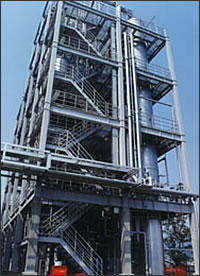
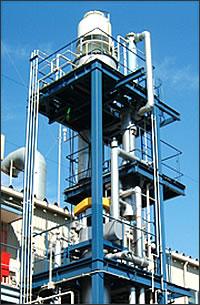
Methanol refinement systems, amyl alcohol refinement systems, ethanol refinement systems, hexanol distillation systems, propanol refinement systems, cyclohexanol distillation systems, isopropanol dehydration systems, ethylene glycol recovery systems, and butanol distillation systems.
FORE:"Give me carte blanche and I will put that right for you. I bear no malice. Reverse the positions and I shall do my best to put you out of the way. But I am not going back there any more."
Hexane distillation systems, tall oil distillation systems, benzene distillation systems, lubricating oil refinement systems, xylene-free distillation systems, low-boiling gas distillation systems, ethylbenzene recovery systems, fusel oil distillation systems, naphthalene distillation systems, propylene recovery systems, and turpentine oil distillation systems.
FORE:I put all my hope on a car that loomed up in the distance. It was assisting in the reprovisioning of Brussels, and only for that reason had the carman got permission to use it. I signalled to him, and he stopped¡ªa big lout of a man who evidently had had a drop too much; he would not allow me to ride on with him, because he preferred to remain alone on his car than to help a spy. "I am a Belgian, a Belgian, and not a traitor, not a traitor of my country," he assured me, with a lot of beery tears. In any case the man meant well, and probably he had tried to drown his troubles in drink.This reaction had begun to make itself felt long before the birth of a philosophical literature in the Latin language. It may be traced to the time when the lecture-halls at Athens were first visited by Roman students, and Greek professors first received on terms of intimate companionship into the houses of Roman nobles. In each instance, but more especially in the latter, not only would the pupil imbibe new ideas from the master, but the master would suit his teaching to the tastes and capacities of the pupil. The result would be an intellectual condition somewhat resembling that which attended the popularisation of philosophy in Athens during the latter half of the fifth century B.C.; and all the more so as speculation had already spontaneously reverted to the Sophistic standpoint. The parallel will be still more complete if we take the word Sophist in its original and comprehensive sense. We may then say that while Carneades, with his entrancing eloquence and his readiness to argue both sides167 of a question, was the Protagoras of the new movement; Panaetius, the dignified rationalist and honoured friend of Laelius and the younger Scipio, its Prodicus; and Posidonius, the astronomer and encyclopaedic scholar, its Hippias, Phaedrus the Epicurean was its Anaxagoras or Democritus.
Ether distillation systems, camphor distillation systems, epichlorohydrin distillation systems, aniline distillation systems, dioxane refinement systems, acetonitrile distillation systems, furfural refinement systems, formalin distillation systems, cyclohexane distillation systems, monoethanolamine rectification systems, polyglycol ether distillation systems, dimethylformamide recovery systems, acrylic glycol ether distillation systems, acrylonitrile refinement systems, acetone recovery systems, pyridine distillation systems, methyl ethyl ketone recovery systems, picoline distillation systems, methyl isobutyl ketone recovery systems, and acetaldehyde recovery systems.
